
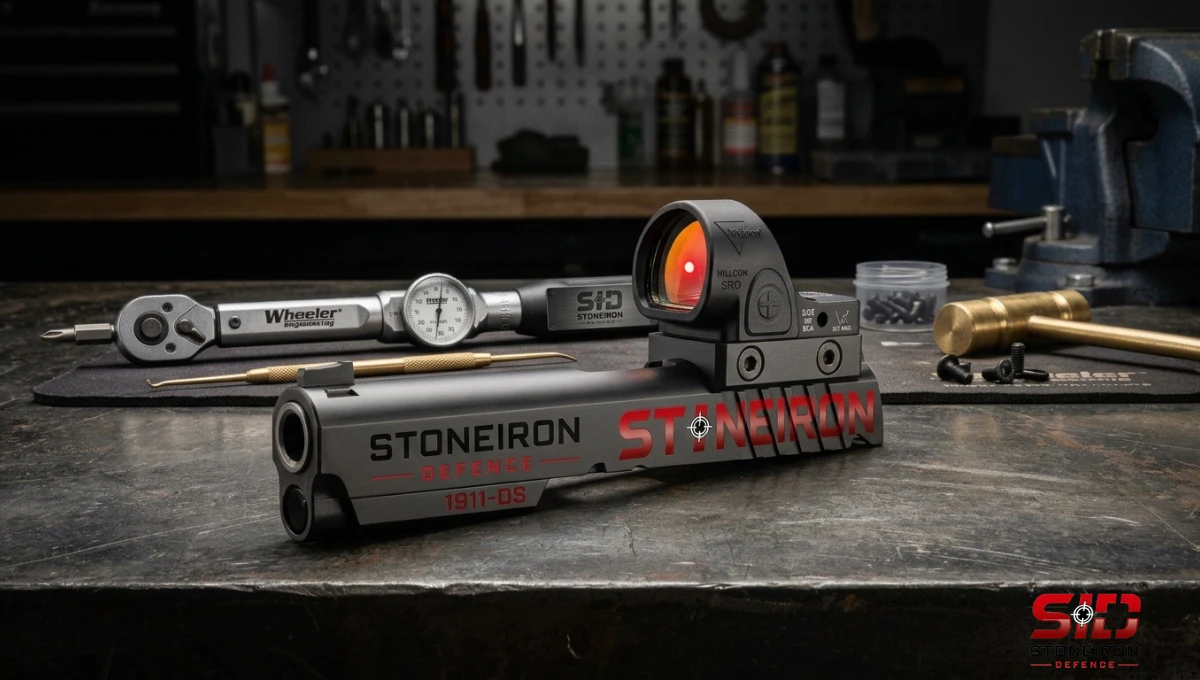
Springfield Prodigy Optic Plates: Best Steel Mounts
Apr 24th 2026
Modern tactical shooter performance relies on absolute equipment synergy. Whether fine-tuning a pistol for competitive 2-Gun matches, upgrading a duty sidearm, or building a home-defense firearm, relying on factory components often leaves performance, speed, and accuracy on the table.
Standard firearms are designed to meet baseline consumer pricing, which usually results in lightweight aluminum or soft polymer hardware. Under sustained live-fire training, high slide velocities, and heavy recoil impulses, these stock parts eventually show their limitations.
At StoneIron Defense (SID), we build tactical hardware explicitly engineered to solve structural failure points. From precision 4140 steel optic mounting solutions to rigid receiver rails, upgrading key touchpoints transforms a basic firearm into a duty-grade tool. In this comprehensive technical guide, we explore the essential tactical accessories required to achieve maximum reliability, zero retention, and ergonomic mastery across popular modern firearm platforms.
1. The Engineering Behind Slide-Mounted Optic Reliability
The rapid adoption of Miniature Red Dot Sights (MRDS) on handguns has fundamentally changed dynamic shooting. Target acquisition speeds increase dramatically, and shooter focus shifts naturally to the target rather than front-sight alignment.
However, slide-mounted optics experience brutal forces during operation. Every time a round fires, the slide accelerates backward, slams into the frame, and strips a fresh round from the magazine. This process generates hundreds of Gs of kinetic shock directly into the mounting footprint.
Why Factory Plates Fail Under Duty Conditions
Many factory optic-ready handguns include universal or cast aluminum adapter plates. Aluminum expands at a different rate than the steel slide when exposed to friction and thermal load.
Over time, soft threads strip out under proper mounting torque (12–15 in-lbs), leading to sheared mounting screws or lost zero. Steel plates CNC-machined from stress-relieved 4140 steel eliminate this weakness by locking tightly to the slide cuts without flexing or deforming.
| Plate Construction | Recoil Impulse Endurance | Thread Shear Limit | Long-Term Zero Stability |
|---|---|---|---|
| Polymer / Plastic Factory Inserts | Poor (Cracks under heat and shock) | Very Low (< 8 in-lbs torque) | Unacceptable for serious use |
| 6061-T6 Cast Aluminum Plates | Moderate | Moderate (Risk of thread stripping) | Requires constant torque checking |
| SID CNC 4140 Steel Plates | Duty Grade (Zero Flex) | High Torque Limit (15+ in-lbs) | Permanent Lockup |
"If your optic plate moves even five thousandths of an inch during live fire, your point of impact shifts by inches downrange. Steel-on-steel contact is the baseline standard for duty-grade reliability."
2. Platform Spotlight: Springfield Prodigy Optic System Optimization
The Springfield Armory Prodigy introduced double-stack 1911 (2011) performance to a wider shooting audience. Its double-column magazine capacity and 1911 trigger pull make it a fast, accurate platform. However, to unlock its full potential, selecting an exact-fit steel optic adapter plate tailored to your preferred optic footprint is critical.
Different optics use distinct mounting footprints, screw dimensions, and recoil pin setups. Installing an improper adapter causes optic movement or forces the red dot to sit higher than necessary, disrupting natural point-of-aim.
Matching the Right Optic Plate to Your Sight Footprint
To ensure seamless integration, choose a custom plate precision-engineered for your target dot footprint:
- Trijicon RMR / SRO Footprint: Highly popular for combat and competition setups. Using a duty-grade Springfield Prodigy Optic Plate for Trijicon RMR / SRO ensures maximum pin engagement and recoil post-lockup for duty use.
- Holosun Micro Footprint (K-Series): For shooters running slim micro red dots with concealed-carry profiles, the Springfield Prodigy Optic Plate for Holosun 407K / 507K drops the optic lower onto the slide axis, aiding rapid dot indexing.
- EOTech Enclosed Sights: Shooters running the EFLX optic benefit from the heavy recoil lug support on the Springfield Prodigy Optic Plate for EOTech EFLX, maintaining zero during high-round-count sessions.
- Vortex & HEX Footprints: Wide window sights require rigid lateral support. The Springfield Prodigy Optic Plate for Vortex Viper / HEX Dragonfly delivers clean indexing without adding unnecessary height to the sight picture.
3. Upgrading 1911 Internal & External Ergonomics
The classic single-stack 1911 remains a benchmark for precision marksmanship. However, stock 1911 components can benefit significantly from modern engineering upgrades. Tactical upgrades focus on mechanical consistency, smooth recoil tracking, and fast reload manipulation under stress.
Essential 1911 Component Upgrades
Upgrading secondary controls gives shooters better control over the firearm without altering the core mechanical safety design:
- Full-Length Guide Rod Assemblies: Replace two-piece or shortened recoil systems to prevent spring binding, leading to smoother cycling.
- Flared Magwells: Expands the grip opening, allowing tapered single-stack magazines to slide in quickly during emergency reloads.
- Extended Slide Releases & Thumb Safeties: Provide positive thumb positioning for rapid safety disengagement without breaking grip posture.
- Precision Grip Bushings & Screws: Steel-machined bushings keep custom grip panels securely attached during high-volume recoil cycles.
4. Long-Range Scope Mounting: Picatinny Rail Architecture
Precision rifles and modern sporting carbines rely heavily on MIL-STD-1911 Picatinny rail systems for mounting magnified optics, illuminators, and target designators. Unlike handgun optics that move with the slide, rifle optics encounter heavy linear recoil forces and operational impacts in field environments.
Selecting Rigid Scope Rings and Risers
A high-end scope cannot perform properly in weak mounting rings. Quality Picatinny scope rings use cross-bolts to clamp onto rail slots, preventing optical displacement under heavy recoil. When selecting mounting hardware, verify tube diameter compatibility (1-inch, 30mm, or 34mm) and select a height profile that provides adequate bell clearance over the barrel shroud.
| Rifle Mount Type | Operational Purpose | Torque Standard (Base / Ring) |
|---|---|---|
| Picatinny Scope Rings | Secures magnified optic tubes directly to receiver rails. | 30–45 in-lbs (Base) / 15–18 in-lbs (Rings) |
| Cantilever Scope Mounts | Pushes optic forward on AR-15 receivers for proper eye relief. | 35–45 in-lbs (Base) / 15–18 in-lbs (Rings) |
| Red Dot Picatinny Risers | Raises sightline to Absolute or Lower 1/3 co-witness height. | 20–30 in-lbs (Base Clamps) |
5. Installation Guidelines for Long-Term Field Durability
Buying quality tactical components is only part of the equation; proper installation ensures they hold up under live-fire conditions. Follow these standard maintenance procedures when mounting optic plates or receiver hardware:
- Degrease All Threads: Factory packing oil reduces friction, which disrupts accurate torque readings. Clean all threaded holes and screws with isopropyl alcohol before installation.
- Apply Threadlocking Compound: Use medium-strength threadlocker (Blue Loctite 242/243) on optic and mount screws to prevent thread backing caused by vibration.
- Use a Torque Wrench: Never rely on hand feel alone. Over-torquing snaps mounting screws or crushes main tubes, while under-torquing leads to loose hardware.
- Apply Witness Marks: Draw a small reference line across screw heads and the plate body using a paint pen. This allows for quick visual checks during range sessions to verify hardware remains secure.
Upgrade Your Hardware with StoneIron Defense (SID)
Don't let factory hardware limit your performance. Explore our line of USA-machined steel optic plates, 1911 components, and scope mounting hardware built for maximum reliability.